Human Performance Operating System
For Contractors.

The Contractors Playbook: Built 2 Win Show 

Built 2 Win is a performance-driven media platform for contractors who are tired of surviving chaos and ready to lead at a higher level. We combine elite performance principles with real conversations from top contractors, operators, and leaders to help strengthen the 5 components that actually determine long-term success: your Foundation, Frame, Engine, Operations, and Crew.

Most construction content teaches people “how to build projects” — we help develop the person who carries the pressure of building them. This show exists to elevate the contractor’s voice, restore pride in the industry, and create a community where high performers can learn from the best, sharpen their leadership, and help leave the construction industry better than they found it.

Playbook: New Episodes Every Week

Every episode is a tool. Filter by topic and find exactly what your business needs right now.
So She Started Her Own Electrical Construction Company
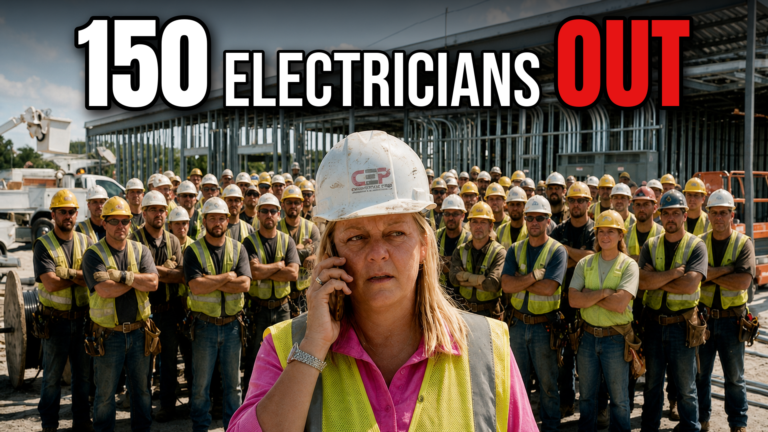
Debbie Rodriguez was two days from opening a new company when a truck turned in front of her motorcycle. She laid the bike down, flew off the seat, and the truck's back tires ran her over. Five surgeries and three blood transfusions later, with a broken back, pelvis and hips, she told every visitor not to cry for her. On April 28, 2008, she walked back into the office on her own two feet. Debbie skipped college and started in day labor at 23, opening a Jacksonville office at 5 a.m. The first manager who interviewed her said her skin was too thin for this industry. Today she owns Competitive Edge Partners, runs the Orlando and Jacksonville markets for Quality Labor Management, founded the workforce nonprofit iBuild, and chairs ABC Central Florida. Chris Coghlan asks her how she measures success when the scoreboard isn't a P&L. Debbie walks through the day electrical contractors refused to let her put her crews through apprenticeship ("if they want a real job, they can come work for us"), the $2.5 million in work she lost when she started her own electrical company anyway, the $3 million contract already in her back pocket, and how iBuild now teaches the trades behind prison walls.
If you don’t understand bonding, you don’t understand how contractors scale
Getting bonded starts with knowing what a surety actually sees when it looks at your company. Brett Ragland learned it the hard way: his first account as a surety underwriter went bad. OSHA shut the jobsite down, and the loss cost the surety $1 million, a third of what his whole office took in premium that year. Brett spent 17 years on the surety side, underwriting bonds at Travelers, Continental, and CNA. Today he's a partner at Johnson & Company, an Orlando bonding and insurance agency, where he works alongside his two sons. Chris Coghlan asks him what a surety looks at before it bonds you. Brett walks through the three C's (character, capital and capacity), the four numbers an underwriter pulls off your WIP schedule, what the surety does when a bonded job goes bad, and why his team works off the engineer's estimate instead of your real bid number. If you need more bonding capacity, or will in the next few years, start here.
How a Construction Crew Changed His Life – Before Harvard and a Run for $9B Orange County
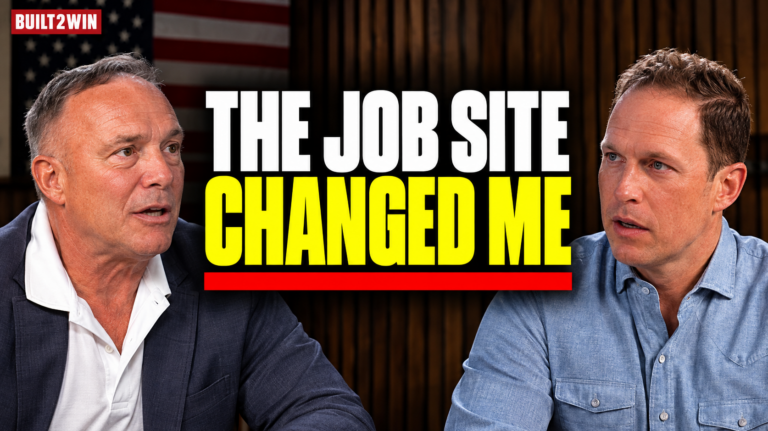
At 16 he was sleeping on a friend's couch after climbing in through the basement window. At 22, he was mixing mud and carrying chimney liners on a masonry crew in Franklin Park, New Jersey. A general contractor named Billy Hendricks had put him on the crew and told him he’d start at the bottom. Today he's 68, a Harvard MBA who built medical-technology companies for thirty years — and a candidate in the November 3 runoff for Orange County Mayor. Chris Messina sits down with Chris Coghlan for a conversation that is not about politics. It's about what a construction crew teaches you that Harvard never will, why a contractor was the first person to call him about the sewer main break near Aquatica, what a 70-step approval for a parking lot says about why Orange County is the hardest county in Florida to build in, and the $10 million trades fund he says he'd launch so a kid who's good with his hands doesn't need a quarter-million-dollar degree to build a life.
He Couldn’t Afford a Hammer. Then He Built a $100M Construction Company.
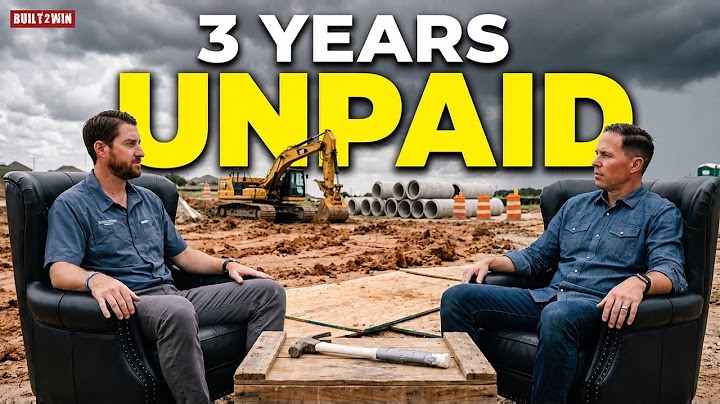
There's a hammer hanging in the lobby with a piece of PVC and duct tape where the handle should be. "We could not afford a new hammer." Chris Coghlan sits down with Ben Burgess, P.E., founder of Burgess Civil, who started in June 2014 with a tiny bit of working capital, five men hired off Craigslist, and one rented office behind a real estate receptionist he asked to pretend she worked for him. Twelve years later: Burgess Civil employs roughly 200 people, has about $100 million in backlog, $130 million in DOT bonding capacity, and the site package on the USF football stadium. Ben didn't take a paycheck for the first three years — there are still employees at Burgess Civil with employee numbers lower than his. He ran the business and the projects during the week and estimated on weekends. Then a divorce settlement put him millions of dollars in personal debt in January 2020, and COVID shut down his residential work ten weeks later. Ben walks through all of it: the broken hammer hanging in his lobby, cutting from 95 people to 60 and getting back to 100 within 90 days, the heavy equipment simulator that catches operators who've never actually run one, and the daily green/red scoreboard that tells every foreman whether he made or lost money that day instead of sixty days later. If you're building a crew, deciding what to self-perform, or trying to figure out how to keep good people in the trades, this one is for you.
What Leading Soldiers in Combat Taught Me About Building a Construction Company
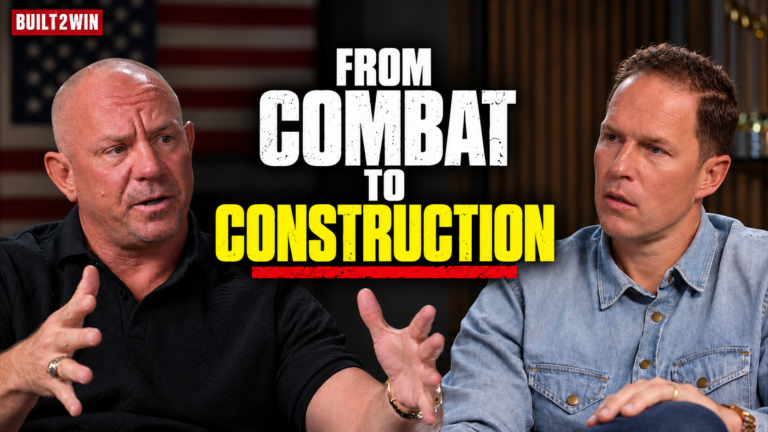
Six years after he resigned his commission, a Western Union mailgram told Michael Waldrop to report for Afghanistan in 30 days. He was wounded three weeks in, talked his way back onto a helicopter, and finished the tour. Today, he builds facilities that serve the veteran community he came from. Chris Coghlan sits down with Michael Waldrop, founder and chairman of Blue Cord Design & Construction, to discuss leading men in combat, coming home, and building a construction company around the people he served with. From receiving a property-tax bill while deployed in Afghanistan — and turning that frustration into a Florida constitutional amendment — to convincing two men to take a million-dollar chance on his vision, Michael lays out the unlikely path that led to Blue Cord Design & Construction.
80-Year Construction Company: MASTERCLASS on Selling a Product the Market Said NO To
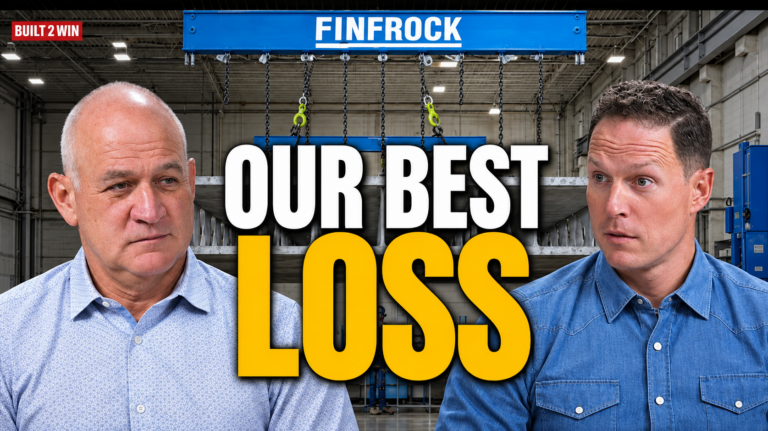
The best job FINFROCK ever lost ended up being the one that gave the company time to rethink how parking garages should be built. What followed was a decades-long transition from precast concrete subcontractor to a fully integrated design-build firm. Chris Coghlan sits down with Bill Finfrock, president of FINFROCK, to discuss moving up the construction value chain — from manufacturing pieces of the building to taking responsibility for its design, engineering and construction. From his early days estimating projects, to FINFROCK developing and building its own hotel to prove a structural system the market hadn’t yet embraced, Bill breaks down how a company founded in 1945 transformed the way it delivers buildings. Bill also discusses the risk of leaving one business model before the next is guaranteed to work, why controlling more of the construction process can create better outcomes, and what it takes to bet your own resources on an idea the market hasn’t proven yet.
NFL Hall of Famer/5X All Pro, Now A Construction CEO: “I Never Got Comfortable. Not One Season”
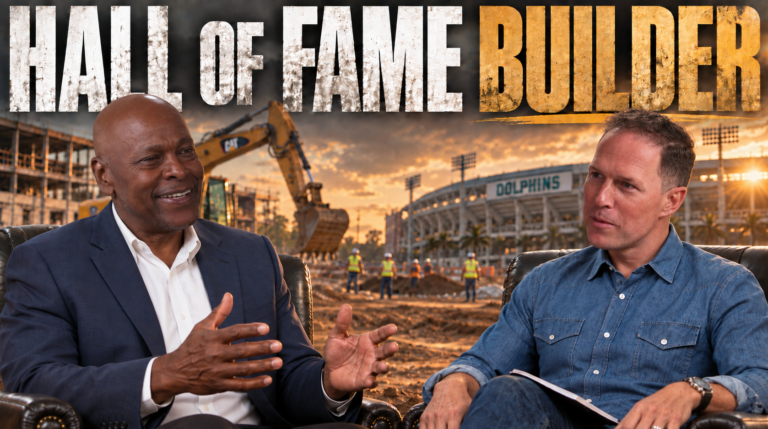
Five straight All-Pro seasons ended on one Monday night hit in December 1987. The nerve never regenerated. Four years later Dwight Stephenson started a construction company with his wife, and stocked the drywall himself. Chris Coghlan sits down with Pro Football Hall of Fame center Dwight Stephenson, co-founder of D. Stephenson Construction, to discuss what transfers from a locker room run by Bear Bryant and Don Shula to a job site — and what doesn't. From his father working two jobs for 47 years to a first contract that took the company from zero to 200 people in a month, Dwight lays out the second career he built after the one he trained for was taken away.
A 1$ Million Dollar Bust, No Change Order, And the Builder Who Paid It Anyways
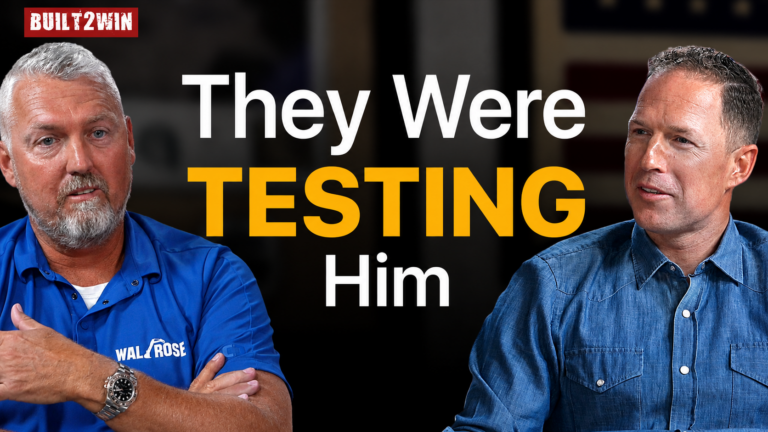
An estimator took the roads off on the wrong scale — a $1 million bust in asphalt and rock. Wal-Rose Site Development ate it, finished the job, and told the builder at the final walkthrough. Chris Coghlan sits down with Jeremy Griffin, VP and third-generation owner of Walrose Site Development, to discuss how a Central Florida dirt contractor became a 300-person full-site-package company — and what it costs to be the one who tells the truth about a bad bid. From cutting two fiber optic lines in his first week on a machine to developing 980 lots in 16 months, Jeremy lays out how Wal-Rose went from his dad and a handful of guys to 20+ pipe crews and over 300 pieces of iron. If you run a site work, utility or dirt shop and you're deciding what to self-perform, when to RPO a machine, and how to build a superintendent bench instead of hiring one — this one is for you.
Hensel Phelps: What It Really Takes to Succeed at a Major Construction Company
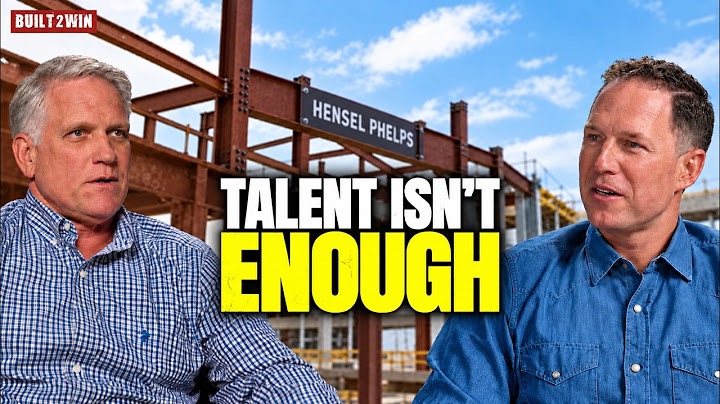
He watched the Pentagon burn from a rooftop three miles away and saw a fighter jet come out of nowhere to turn back a news helicopter. Hensel Phelps would go on to renovate Wedges 2 through 5 of the Pentagon — a 4.5-million-square-foot project that took more than a decade to complete. Chris Coghlan sits down with Matt Krystolic, operations manager at Hensel Phelps, to discuss nearly 30 years with one employee-owned construction company — and what it actually takes to work your way from field engineer to company stockholder. From counting Pentagon windows by hand to helping lead major projects at Orlando International Airport and Universal’s Epic Universe, Matt breaks down the career behind the projects — and how a company founded in Greeley, Colorado, in 1937 eventually transitioned to employee ownership. If you’re building a career in commercial construction — or wondering whether staying somewhere long enough to earn the next opportunity is worth it — this one is for you.
Kiewit Exec: Professional Baseball Bred Him for Success At This $18B Construction Powerhouse
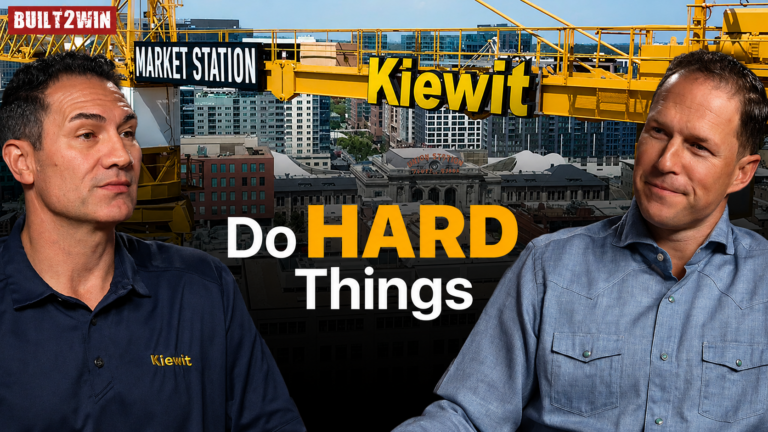
Nick Sosa got fired the way most pro athletes do — not by choice. Released on the road because the Twins needed his roster spot for a pitcher, calling his mom for a ride home from the airport. That was the end of baseball. Today he's a construction leader at Kiewit Infrastructure — an $18 billion empire and one of the largest contractors in North America. But he didn't parachute in. He started over as a rod man in the dirt, learned survey, ran a crew before he was ready, and built his way up to helping deliver Orlando's $1.4B Terminal C. In this episode Nick gets honest about what most executives won't say: having the title before the mastery, why he keeps a photo of his worst job on the wall, how Kiewit's earn-it ownership culture actually works, and why he goes elk hunting every year to get sharper at work. If you've ever been fired, promoted before you were ready, or had to finish something that was eating your lunch — this one's for you.

Get the Human Performance Operating System
The COGS Mentality

10-minute weekly newsletter to optimize your performance with the Built 2 Win Pillars: Foundation, Frame, Engine, Operations, Crew

  • Jump-start your Mondays with my top story, lesson, and quote for the week.
  • Learn the tactics and mindset I used to go from making subs @ Subway --> World Series Champion --> eight-figure plus business operator.
  • Access exclusive downloads and offers only available for subscribers.
  • Opportunities to engage with me and the team.
  • Get the free Big League Mindset Playbook.

"*" indicates required fields

This field is for validation purposes and should be left unchanged.
First Name*
By submitting this form, I agree to the Privacy Policy.